
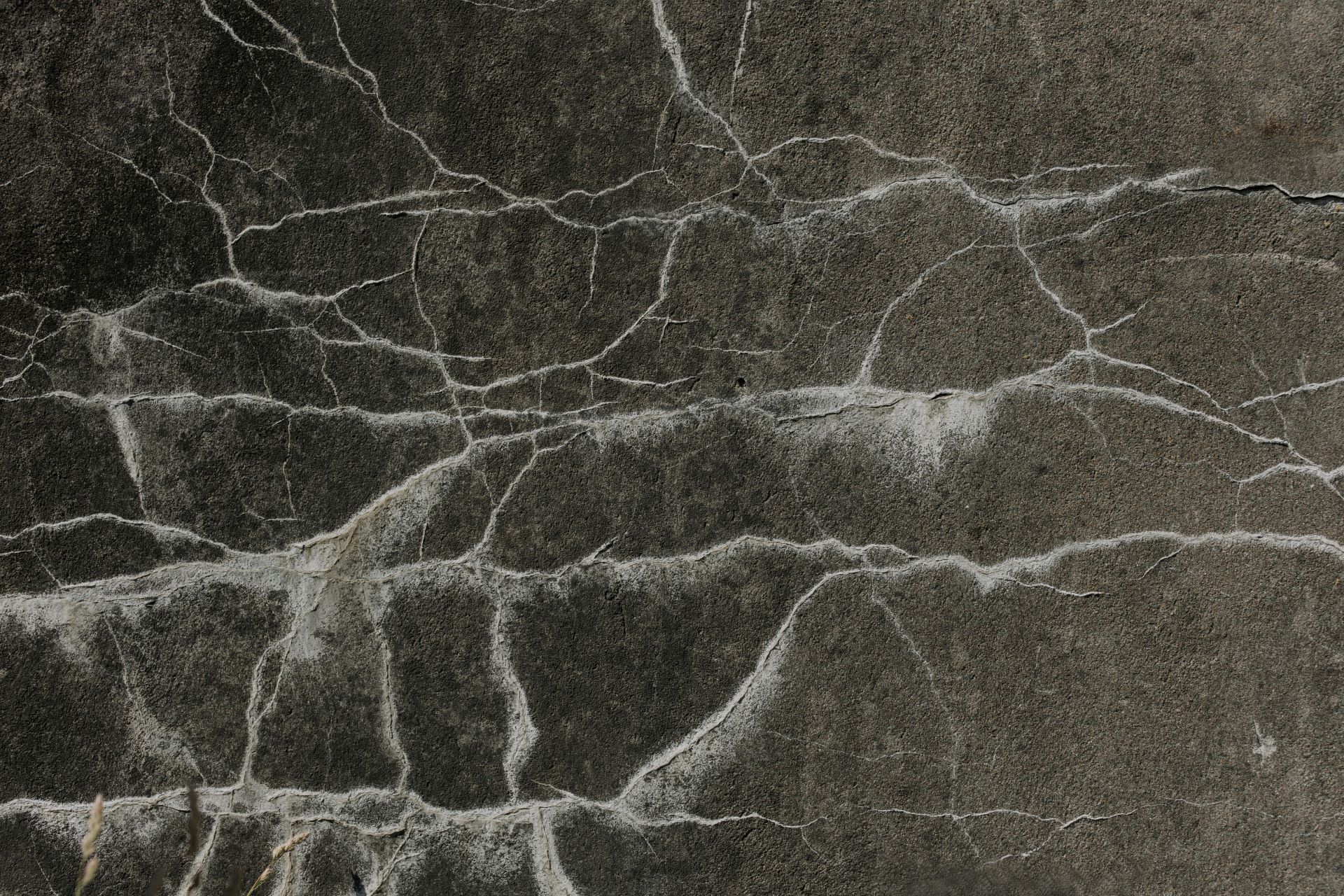
Concrete Roof Cracks: The Gauteng Thermal Stress Problem
Concrete roof slabs in inland South African cities behave like quiet, heavy witnesses to a relentless environmental tug-of-war. In Gauteng especially, where altitude, dry air, and sharp temperature swings dominate the climate, these slabs are not merely structural elements. They are living stress maps, constantly expanding and contracting in response to heat by day and cooling by night.
Cracking in these slabs is often misunderstood as a single-event failure or poor workmanship alone. While construction quality certainly plays a role, the deeper driver in inland environments is thermal cycling. The daily rhythm of intense solar heating followed by rapid nocturnal cooling creates a repeated strain cycle that slowly weakens concrete from within.
To understand why cracks appear faster in places like Johannesburg, Pretoria, and surrounding urban zones, one must look beyond surface defects and into the physics of heat, restraint, and material fatigue under cyclic thermal loading.
Gauteng’s Inland Climate: A Thermal Pressure Cooker
Gauteng sits on a high plateau, where altitude brings thinner air and reduced atmospheric buffering. This means heat is absorbed quickly during the day and released just as quickly after sunset. Unlike coastal regions, where humidity and sea breezes moderate temperature shifts, inland cities experience more extreme diurnal variation.
On a typical summer day, concrete roof surfaces can climb well above ambient air temperatures due to direct solar radiation. Dark waterproofing membranes, dust accumulation, and urban heat island effects intensify this heating. It is not uncommon for slab surfaces to exceed 50°C under peak sun exposure.
Then comes nightfall. With minimal humidity and clear skies, heat radiates rapidly into the atmosphere. Temperatures can drop by 15–20°C or more within hours. The concrete slab, once expanded and stressed, suddenly contracts again. This repeated expansion-contraction cycle becomes a silent mechanical fatigue process.
Over time, the slab begins to lose its uniform internal cohesion, especially where restraint prevents free movement.
How Concrete Responds to Heat and Cold
Concrete is often perceived as rigid and unchanging, but it is in fact a thermally active composite material. It expands when heated and contracts when cooled. This behaviour is governed by its coefficient of thermal expansion, which, although small, becomes significant when applied across large roof spans.
The issue is not expansion itself, but differential expansion. The top surface of a roof slab heats faster and more intensely than the bottom. This creates a temperature gradient through the thickness of the slab.
The top layer expands more than the cooler underside, causing the slab to curl slightly. This curling introduces internal tensile stresses, especially near the top surface where concrete is weakest in tension.
Concrete performs well under compression but poorly under tension. Once tensile stress exceeds its capacity, microcracks begin to form. Initially invisible, these cracks gradually propagate through repeated thermal cycles.
This is not a sudden failure but a slow material fatigue process driven by daily environmental rhythm.
Day-Night Thermal Gradient Mechanism
The most critical driver of cracking in inland roof slabs is the thermal gradient between the top and bottom surfaces.
During daytime heating, the roof surface is exposed to direct solar radiation. The top layer expands while the underside remains relatively cool due to insulation from internal building temperatures. This creates a downward curling effect at slab edges and restraint points.
At night, the reverse occurs. The top surface cools rapidly, contracting faster than the retained heat in the lower layers. The slab then attempts to curl upward. This reversal of stress direction twice every 24 hours produces a fatigue cycle similar to bending a metal wire back and forth until it weakens.
Over months and years, this thermal cycling leads to:
- Microcrack initiation at surface level
- Crack widening along restraint edges
- Hairline fractures following reinforcement lines
- Progressive water ingress once protective layers fail
The key issue is repetition. Even low-level stress becomes destructive when applied thousands of times under consistent environmental conditions.
In Gauteng’s climate, this cycle is especially aggressive due to clear skies and high solar exposure.
Structural Restraint in Roof Slabs
Concrete roof slabs rarely move freely. They are restrained by parapets, beams, columns, lift cores, and adjoining structural elements. This restraint is necessary for stability, but it also becomes a hidden contributor to cracking.
When concrete wants to expand or contract but cannot, stress accumulates internally. The highest stress concentrations occur at:
- Slab corners
- Junctions with vertical walls
- Around service penetrations
- At construction joints
These points become preferred crack initiation zones.
In inland climates, restraint amplifies thermal stress. Instead of the slab gently expanding and releasing energy, it stores that energy as internal strain. When the tensile limit is reached, the concrete releases that energy suddenly in the form of cracking.
The problem is compounded in large-span commercial and residential slabs common in Gauteng’s urban developments, where expansion joints are often insufficient or poorly detailed.
Construction Factors that Accelerate Cracking
While climate is the primary driver, construction practices determine how quickly cracks appear and how severe they become.
One major factor is curing. Concrete that is not adequately cured loses moisture too quickly in Gauteng’s dry air. This leads to shrinkage cracks even before thermal cycling begins.
Another factor is mix design. High water-to-cement ratios increase porosity, making concrete more susceptible to thermal movement. Poor compaction leaves voids that act as stress concentrators.
Reinforcement detailing also plays a role. Insufficient steel distribution or poorly placed mesh reduces the slab’s ability to distribute tensile forces evenly.
Even construction timing matters. Slabs poured during extreme heat may already be under initial thermal stress before they have fully set.
Over time, these early weaknesses interact with daily thermal cycling, accelerating deterioration far beyond what climate alone would cause.
Waterproofing and Surface Exposure
Roof slabs in Gauteng are rarely left bare. They are typically covered with waterproofing membranes, coatings, or screeds. However, these layers do not eliminate thermal stress. In some cases, they intensify it.
Dark waterproofing materials absorb more heat, raising surface temperatures further during the day. This increases the thermal gradient between the top and bottom of the slab.
Once microcracks form, waterproofing systems become critical. If they fail or are poorly maintained, water ingress begins. Water entering cracks exacerbates damage through:
- Freeze-thaw cycles in colder inland nights (rare but possible in highveld winters)
- Expansion of moisture within pores during heating
- Corrosion of reinforcement steel
Once steel begins to corrode, it expands, exerting internal pressure that widens cracks further. What begins as a thermal issue becomes a structural degradation cycle.
Signs of Thermal Stress Damage
Thermal cracking does not announce itself loudly at first. It begins subtly, often mistaken for cosmetic imperfections.
Early indicators include:
- Fine hairline cracks forming in random or grid-like patterns
- Cracks appearing near slab edges or parapet junctions
- Slight surface crazing on waterproof membranes
- Repeated damp patches after rainfall
As damage progresses, symptoms become more pronounced:
- Visible crack widening over time
- Water leakage during storms
- Bubbling or lifting of waterproofing layers
- Rust staining near reinforcement paths
At advanced stages, structural movement may become visible, particularly at slab edges or unsupported spans.
Understanding these signs early is critical in inland climates, where deterioration accelerates under daily thermal cycling.
Maintenance Strategies in South Africa
Maintenance in Gauteng conditions must account for both thermal expansion and moisture management. Treating cracks as isolated defects is rarely effective.
The first priority is sealing pathways for water ingress. Flexible sealants that accommodate movement are essential, as rigid fillers tend to fail under continued thermal cycling.
Waterproofing systems should be inspected regularly, particularly after summer heatwaves. Any loss of elasticity or adhesion can quickly lead to slab exposure.
Reflective coatings can also reduce thermal load by lowering surface temperature during peak sunlight hours. This reduces the magnitude of daily expansion.
Drainage systems must be kept clear. Standing water increases thermal absorption and accelerates degradation cycles.
Long-term maintenance planning should assume that thermal cycling will continue indefinitely. The goal is not to eliminate movement, but to manage it safely.
Design Improvements for Inland Cities
Preventing premature cracking begins at design stage. In Gauteng and similar inland environments, thermal behaviour must be treated as a primary structural consideration.
Improved design strategies include:
- Incorporating properly spaced expansion joints
- Using low shrinkage concrete mixes
- Designing for reduced restraint at slab edges
- Applying light-coloured or reflective roof finishes
- Ensuring balanced reinforcement distribution
Thermal modelling during design can also help predict stress zones before construction begins. This allows engineers to reinforce vulnerable areas proactively rather than reactively repairing cracks later.
Another important consideration is slab thickness. While thicker slabs may appear stronger, they can increase internal thermal gradients if not properly designed for heat distribution.
Retrofitting Existing Slabs
Older buildings in Johannesburg and Pretoria often show signs of cumulative thermal damage. Retrofitting is possible, but must be approached with an understanding of ongoing movement.
Crack injection systems using flexible resins can restore water resistance while allowing limited movement. Overlays and resurfacing systems can also help redistribute thermal stress across a new protective layer.
Reflective roof coatings remain one of the most cost-effective retrofits, significantly reducing surface temperature fluctuations.
In severe cases, structural assessment may be required to determine whether reinforcement corrosion has compromised load-bearing capacity.
Retrofitting should always aim to manage thermal movement rather than eliminate it, as the underlying climate conditions remain unchanged.
Concrete roof slab cracking in Gauteng is not a simple defect story. It is a climate-driven performance challenge shaped by daily thermal extremes and structural restraint.
The inland environment creates a repeated cycle of expansion under intense daytime heat and contraction under rapid nighttime cooling. Over time, this cycle slowly fatigues even well-constructed slabs, especially where design or maintenance is lacking.
Understanding this mechanism transforms how engineers, builders, and property owners approach roof design and upkeep. Cracks are not just failures in material, but signatures of a persistent environmental dialogue between structure and sky.
In Gauteng’s climate, durability is not achieved by resisting movement entirely, but by learning to accommodate it gracefully and continuously.