Flat Roof Maintenance in South Africa: Drainage Guide
The Hidden Discipline of Flat Roof Longevity
Flat roofs look simple from the street. Clean lines, modern silhouettes, and efficient use of space make them a popular choice across South Africa’s residential estates, commercial buildings, warehouses, and mixed-use developments. But beneath that calm, horizontal appearance lies a surface that is constantly negotiating with gravity, rainfall, heat expansion, dust, windborne debris, and time itself.
Unlike pitched roofs that naturally shed water, a flat roof depends on precision. It depends on design accuracy, installation quality, and above all, disciplined maintenance. In South Africa’s varied climate conditions, from Cape Town’s winter rainfall to Gauteng’s summer storms and intense UV exposure, the margin for neglect is almost non-existent.
The truth is simple. A flat roof does not fail suddenly. It degrades slowly through ignored drainage and unnoticed membrane fatigue.
Understanding the Role of Drainage in Flat Roof Systems
Drainage is not a feature of a flat roof. It is its lifeline. Every square metre of roofing surface must guide water efficiently toward outlets, scuppers, gutters, or internal drains. When this system is compromised, even slightly, water begins to linger. And standing water is the quiet beginning of structural distress.
In South African construction contexts, drainage challenges are often intensified by seasonal leaf fall, windblown sand, and construction debris from nearby developments. These materials accumulate quickly and silently.
Proper drainage systems typically rely on:
Internal drains that connect to stormwater pipes within the building structure
External gutters that channel runoff away from edges
Scuppers that allow water to exit through parapet walls
Tapered insulation systems that create intentional slopes
Each of these elements must function as part of a coordinated system. If one fails, the entire roof begins to suffer uneven load distribution.
Even a few millimetres of standing water after rainfall can indicate a slope deficiency or blockage. Over time, this water accelerates membrane deterioration, increases thermal stress, and introduces microscopic pathways for leakage.
Why Drainage Failure Is the First Stage of Roof Damage
Water is patient. It does not force its way through a roof system immediately. Instead, it lingers, evaporates, returns, and slowly tests every weak point in the waterproofing layer.
In flat roofing systems across South Africa, drainage failure typically manifests in three stages.
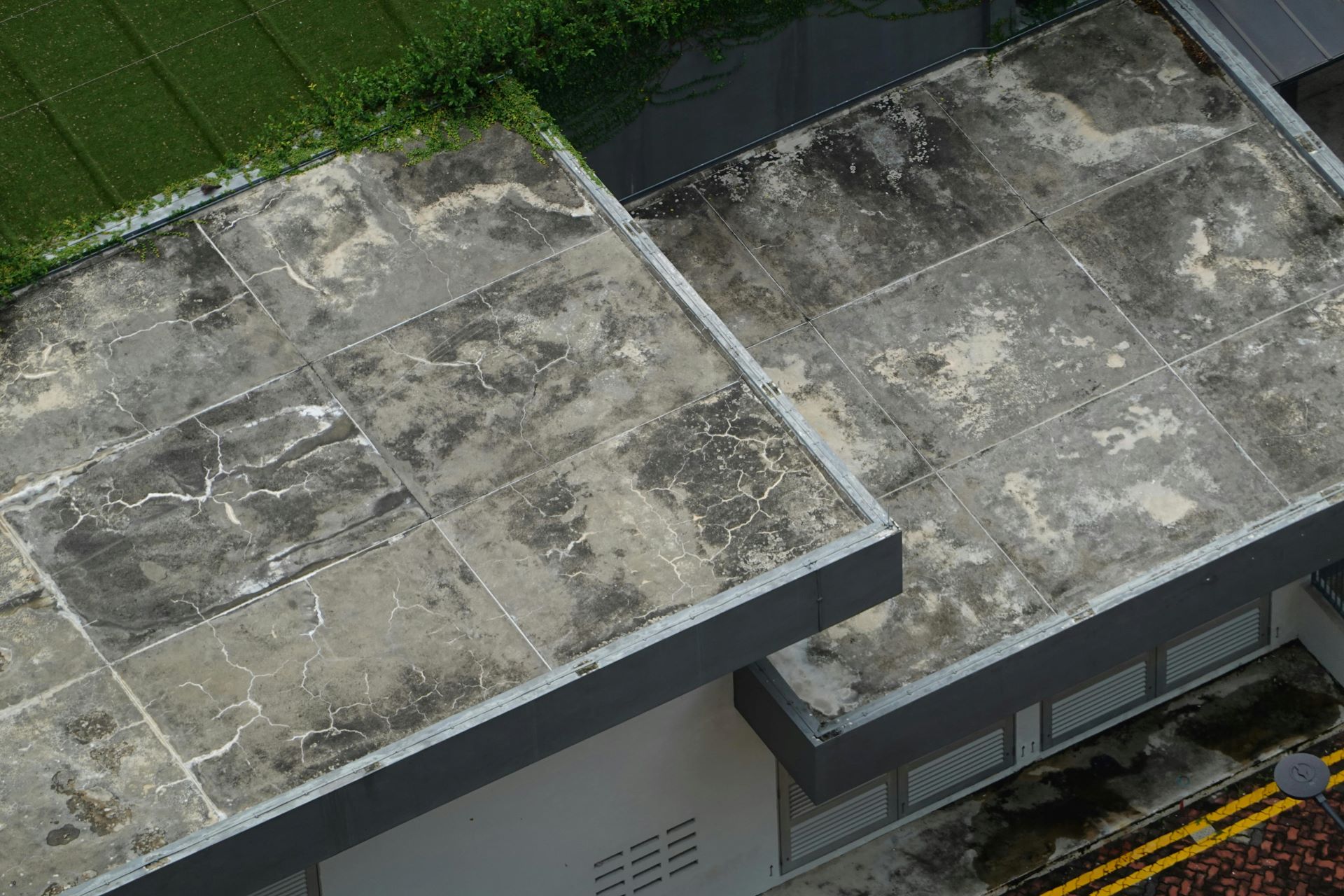
First comes surface ponding. This is where water remains visible long after rainfall has stopped. It often appears harmless, especially if it is shallow, but it is the earliest warning sign of structural imbalance.
Second is membrane saturation stress. The waterproof layer begins to experience prolonged exposure, which weakens adhesives and expands micro-cracks. UV exposure intensifies this damage, particularly in regions like Gauteng where sunlight intensity is high year-round.
Third is infiltration. At this point, water begins to find entry points through seams, joints, or punctured areas of the membrane. Internal ceiling staining or insulation dampness becomes visible.
By the time infiltration occurs, the cost of repair escalates significantly compared to routine maintenance intervention.
The Anatomy of a Flat Roof Membrane
The membrane is the skin of the flat roof. It is what keeps water out, heat regulated, and structural layers protected. In South Africa, common membrane systems include modified bitumen, EPDM rubber, PVC sheets, and liquid-applied waterproofing compounds.
Each system behaves differently under environmental stress, but all share one requirement. They must remain intact, flexible, and properly bonded to the substrate.
Membranes are constantly under tension. Thermal expansion during hot afternoons followed by rapid cooling in the evening creates continuous movement. Over time, this movement can cause:
Seam separation
Surface cracking
Blistering beneath the membrane
Edge lifting near parapets and flashings
A well-installed membrane can last many years, but only if it is supported by consistent inspection cycles. Without inspection, even premium materials degrade prematurely.
The Critical Importance of Membrane Inspection Cycles
Inspection cycles are the structured intervals at which a flat roof is evaluated for early signs of wear and failure. In South African construction maintenance practice, these cycles are not optional. They are essential to extending roof lifespan and preventing costly structural damage.
A professional inspection cycle focuses on three core zones of the roof system: the drainage network, the membrane surface, and the perimeter detailing.
Drainage points are checked for blockages and sediment buildup. The membrane surface is assessed for punctures, UV damage, and seam integrity. Edges, joints, and flashing areas are inspected for separation or movement.
Inspection timing is typically aligned with seasonal shifts. After heavy rainfall periods, roof systems should be evaluated for ponding or overflow issues. After dry, high-heat seasons, attention shifts toward UV degradation and membrane contraction stress.
Skipping even one inspection cycle can allow small defects to evolve into system-wide failures.
South African Climate Pressures on Flat Roofs
Flat roofs in South Africa operate under extreme environmental variation. The combination of high solar radiation, sudden thunderstorms, coastal humidity, and inland temperature swings creates a demanding environment for building envelopes.
In coastal regions such as Cape Town and Durban, moisture exposure is a constant factor. Salt-laden air accelerates corrosion of metal components and can weaken adhesives used in membrane systems. Wind-driven rain also places additional pressure on drainage outlets.
In inland regions such as Johannesburg and Pretoria, roofs endure intense UV exposure followed by heavy summer rainfall. This cycle of heat expansion and water saturation creates mechanical stress within the membrane layers.
Dust and debris accumulation is another uniquely South African challenge. Construction activity in expanding urban zones introduces fine particulate matter that can clog drains and settle in seams.
These environmental pressures make maintenance not just advisable but structurally necessary.
Drainage Maintenance as a Preventative Strategy
Effective drainage maintenance is not reactive. It is preventative. The goal is not to fix blockages after they occur, but to ensure they never have the chance to form in the first place.
A well-maintained drainage system ensures that water has no opportunity to settle on the roof surface. This involves consistent clearing of outlets, removal of organic matter, and inspection of slope integrity.
Roof technicians often pay close attention to subtle indicators such as slow-draining water or uneven drying patterns after rainfall. These signs often point to underlying issues in slope design or partial obstruction within drainage channels.
A practical maintenance rhythm typically includes regular checks during high-debris seasons, particularly after strong winds or construction activity nearby. While frequency may vary depending on building type, the principle remains consistent. Water must never be allowed to stagnate.
Membrane Inspection in Practice
Membrane inspection is a tactile and visual process that requires trained attention. It involves walking the roof surface carefully, identifying irregularities, and documenting early signs of wear.
Small punctures caused by foot traffic, maintenance equipment, or wind-blown objects can evolve into significant leakage points. These are often invisible from ground level and only become apparent once internal damage occurs.
Inspectors also look for subtle texture changes. A smooth membrane surface is generally healthy, while bubbling, wrinkling, or stiffness can indicate underlying adhesion failure.
Seams and overlaps receive particular attention because they represent the most vulnerable points in any waterproofing system. Even minor separation at these joints can allow water ingress during heavy rainfall events.
Regular inspection allows for minor repairs before full membrane replacement becomes necessary.
Maintenance Cycles That Actually Work
Flat roof maintenance is most effective when structured around predictable cycles rather than reactive interventions.
A practical approach in South African conditions often includes quarterly visual inspections, biannual professional assessments, and immediate post-storm evaluations when severe weather occurs.
This rhythm ensures that both drainage and membrane systems are continuously monitored under changing environmental conditions.
Maintenance is not a single action but a layered process that includes cleaning, assessment, repair, and documentation. Over time, this creates a performance history of the roof that helps predict future vulnerabilities.
The Cost of Neglecting Flat Roof Systems
Neglect in flat roof maintenance does not remain hidden for long. Water infiltration spreads quietly into insulation layers, structural beams, and interior finishes. By the time visible damage appears indoors, the underlying system has often been compromised for months.
Repair costs escalate quickly once structural elements are affected. What could have been a simple drainage clearing or membrane patch becomes a multi-stage restoration involving waterproofing replacement, ceiling repair, and sometimes structural reinforcement.
In commercial buildings, the impact extends beyond repair costs. Operational downtime, tenant disruption, and asset devaluation all become secondary consequences of poor roof maintenance.
The financial logic is clear. Preventative maintenance is significantly more cost-effective than reactive repair.
Building a Culture of Roof Awareness
Flat roof maintenance is often treated as a technical responsibility alone, but in practice it benefits from organisational awareness. Property managers, facility teams, and building owners all play a role in ensuring that early warning signs are not ignored.
Simple awareness of drainage performance after rainfall or visual checks for surface pooling can dramatically improve response times to emerging issues.
When roof maintenance becomes part of routine building observation rather than an occasional inspection event, the entire system becomes more resilient.
Conclusion: The Discipline Above the Ceiling
A flat roof is not passive. It is an active system that responds to water, heat, and structural movement every day of its existence. In South Africa’s demanding climate conditions, it requires discipline rather than occasional attention.
Drainage ensures that water never lingers long enough to become destructive. Membrane inspections ensure that small imperfections never evolve into structural failures.
Together, they form the foundation of long-term roof performance. Not through complexity, but through consistency.
A well-maintained flat roof is not just a construction feature. It is a long-term protection system quietly preserving the integrity of everything beneath it.