
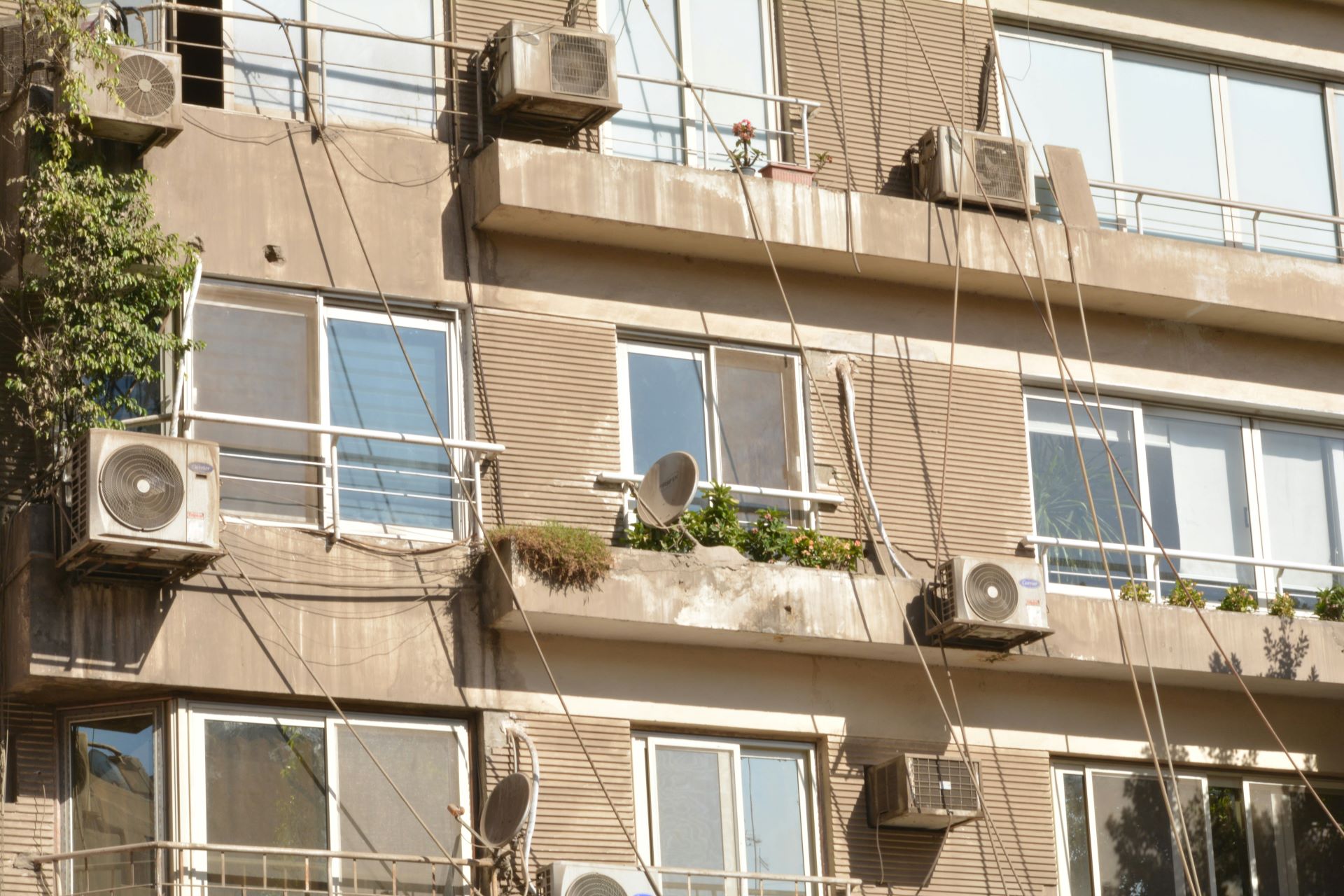
HVAC Systems and Building Moisture Damage Risks
In South African construction and building maintenance, HVAC systems are often treated as comfort infrastructure rather than structural influencers. Yet these systems quietly shape the internal climate of a building in ways that extend far beyond temperature control. They regulate humidity, air movement, and condensation patterns that directly affect how materials behave over time.
Air conditioning and ventilation systems do not simply make interiors cooler or warmer. They create an artificial indoor climate that constantly reshapes moisture behaviour within walls, ceilings, and service cavities. This is where HVAC design begins to overlap with structural durability: not at the thermostat, but in the invisible moisture cycles occurring every hour of operation.
Across South Africa’s diverse climate zones, from the humid coastlines of Durban to the dry inland winters of Gauteng, this interaction becomes even more pronounced. Buildings are not just resisting weather anymore; they are responding to engineered weather from within.
Moisture Cycling as a Structural Stress Mechanism
Moisture cycling refers to the repeated absorption and release of water within building materials as indoor conditions fluctuate. HVAC systems are one of the primary drivers of this cycle.
When air is cooled, its capacity to hold moisture decreases, often pushing excess humidity into surrounding surfaces. When air is heated, it can draw moisture out of materials, drying them rapidly. This constant push-pull dynamic causes microscopic expansion and contraction within porous materials like plaster, brick, concrete, timber, and insulation.
Over time, these movements accumulate stress. Materials do not fail instantly under moisture cycling. Instead, they degrade slowly, losing cohesion, stiffness, and surface integrity. Fine cracking in plaster, loosening of joints, and early corrosion in embedded steel often trace back to repeated humidity fluctuations rather than a single failure event.
HVAC Systems as Indoor Climate Controllers
An HVAC system functions as a controlled indoor climate engine. It regulates temperature, air circulation, filtration, and humidity balance. In doing so, it determines how moisture is distributed between air and solid building components.
In many South African commercial and residential installations, the primary design focus is cooling capacity rather than humidity stability. This creates a subtle imbalance where air feels comfortable, but internal moisture conditions remain unstable.
The result is a hidden environmental layer inside the building. On the surface, conditions appear normal. Within wall cavities and ceiling voids, however, moisture levels may be rising and falling in cycles that materials are not designed to endure indefinitely.
Dew Point and Invisible Condensation
Condensation occurs when air is cooled below its dew point, forcing water vapour to change into liquid form. HVAC systems frequently operate within temperature ranges that bring surfaces close to or below this threshold.
This is particularly important in South African coastal regions where ambient humidity is high for much of the year. Even small drops in temperature can push internal surfaces into condensation territory.
The danger is not always visible water on walls or windows. More often, condensation forms inside hidden spaces such as roof assemblies, duct chases, insulation layers, and behind cladding systems. These are areas where moisture is not easily detected until damage becomes advanced.
Long-Term Material Degradation from Moisture Fluctuations
Repeated moisture exposure weakens building materials in subtle but cumulative ways.
Plaster becomes brittle as salts migrate and crystallise within its structure. Masonry joints lose strength as repeated wetting and drying disrupts bonding. Timber expands and contracts with humidity changes, gradually loosening fixings and joint connections. Steel elements become vulnerable to corrosion when moisture lingers at elevated levels over time.
Insulation materials are also affected. Once they absorb moisture, their thermal performance decreases, forcing HVAC systems to work harder and longer. This creates an energy penalty that compounds over time, increasing operational costs while reducing system efficiency.
HVAC Systems as a Source of Internal Condensation
While HVAC systems help regulate moisture, they can also become sources of condensation problems themselves.
Cooling coils naturally produce condensate as warm air passes over cold surfaces. If drainage systems are blocked or poorly designed, water can accumulate and overflow into surrounding components. Ductwork that is insufficiently insulated may also develop surface condensation, especially when passing through unconditioned spaces.
Over time, these conditions can lead to hidden water damage, microbial growth, and deterioration of insulation materials. This makes HVAC maintenance not only a mechanical requirement but a structural safeguard.
South African Climate Challenges and System Stress
South Africa presents a wide range of environmental conditions that directly influence HVAC performance.
In humid coastal regions, buildings are constantly exposed to moisture-rich air, increasing the risk of condensation in cooled environments. In inland cities like Johannesburg and Pretoria, dry winters and hot summers create extreme seasonal swings in indoor humidity levels.
This variability places HVAC systems under constant adjustment pressure. Systems must simultaneously manage cooling loads, heating demands, and moisture control without overcorrecting in either direction.
When systems are not properly calibrated for these conditions, buildings experience unstable internal climates that accelerate material fatigue.
Air Movement, Pressure Imbalance, and Moisture Pathways
Air does not remain static inside a building. HVAC systems create pressure differences that influence how air moves through rooms, cavities, and structural gaps.
If a building is under negative pressure, it can draw in humid external air through small openings in the envelope. If it is under positive pressure, conditioned air may be forced into colder structural zones where condensation is more likely to occur.
These pressure-driven movements create moisture pathways that are often invisible but highly influential. Over time, they determine where damp patches form, where mould develops, and where structural materials degrade first.
Maintenance as Moisture Risk Management
Routine HVAC maintenance plays a direct role in controlling moisture cycling inside buildings. Clean filters, properly functioning condensate drains, and intact duct insulation all contribute to stable humidity conditions.
When maintenance is neglected, airflow becomes uneven, drainage systems fail, and insulation performance declines. Each of these failures increases the likelihood of uncontrolled moisture accumulation.
From a building maintenance perspective, HVAC servicing should be treated as part of structural preservation, not just mechanical upkeep.
Integrating HVAC and Building Envelope Performance
Modern building performance depends on the interaction between HVAC systems and the building envelope. Walls, roofs, windows, and insulation all respond to the internal climate created by mechanical systems.
If these systems are designed independently, moisture behaviour becomes unpredictable. If they are designed together, the building becomes more stable, energy-efficient, and resistant to long-term degradation.
This integration is especially important in South Africa, where energy efficiency requirements are increasing and buildings are becoming more airtight. Reduced natural ventilation increases dependence on HVAC systems to manage both comfort and moisture balance.
HVAC systems are not passive background utilities. They are active environmental controllers that shape the moisture life of a building. Through constant cycles of cooling, heating, and air movement, they influence how materials absorb, release, and retain water.
In South African conditions, where humidity and temperature extremes vary widely across regions, this influence becomes a critical factor in building durability. When properly designed and maintained, HVAC systems protect structural integrity. When poorly managed, they accelerate hidden deterioration that may take years to surface.
Understanding this relationship is essential for anyone involved in construction or building maintenance. Moisture is not just a weather issue. In modern buildings, it is an engineered condition.