Smarter Roof Inspections with Drone Technology
Roof inspections have traditionally been one of the more hazardous and time-consuming aspects of building maintenance in South Africa. Whether it’s a residential property in Johannesburg, an industrial warehouse in Durban, or a commercial complex in Cape Town, accessing rooftops safely has always required a combination of ladders, scaffolding, and a fair amount of risk tolerance.
Now, drones are changing the game.
These compact flying machines, once associated mostly with hobbyists and aerial photography, have found a powerful new role in construction and maintenance. In a country where safety regulations are tightening and operational efficiency is becoming non-negotiable, drone-based roof inspections offer a compelling alternative to traditional methods.
The shift is not just about replacing boots on roofs with propellers in the sky. It’s about fundamentally rethinking how inspections are conducted, recorded, and acted upon. With high-resolution cameras, thermal imaging, and real-time data capture, drones are turning what used to be a manual, risky task into a streamlined, data-driven process.
The Safety Imperative in South African Construction
Construction and maintenance work in South Africa operates under strict safety expectations, shaped by legislation such as the Occupational Health and Safety Act. Despite this, roof-related incidents remain a concern, particularly on older buildings where structural integrity may already be compromised.
Manual inspections expose workers to several risks. Slippery surfaces, unstable roofing materials, and unpredictable weather conditions all contribute to the danger. In industrial environments, the risks are amplified by factors such as heat exposure, chemical residues, and complex roof geometries.
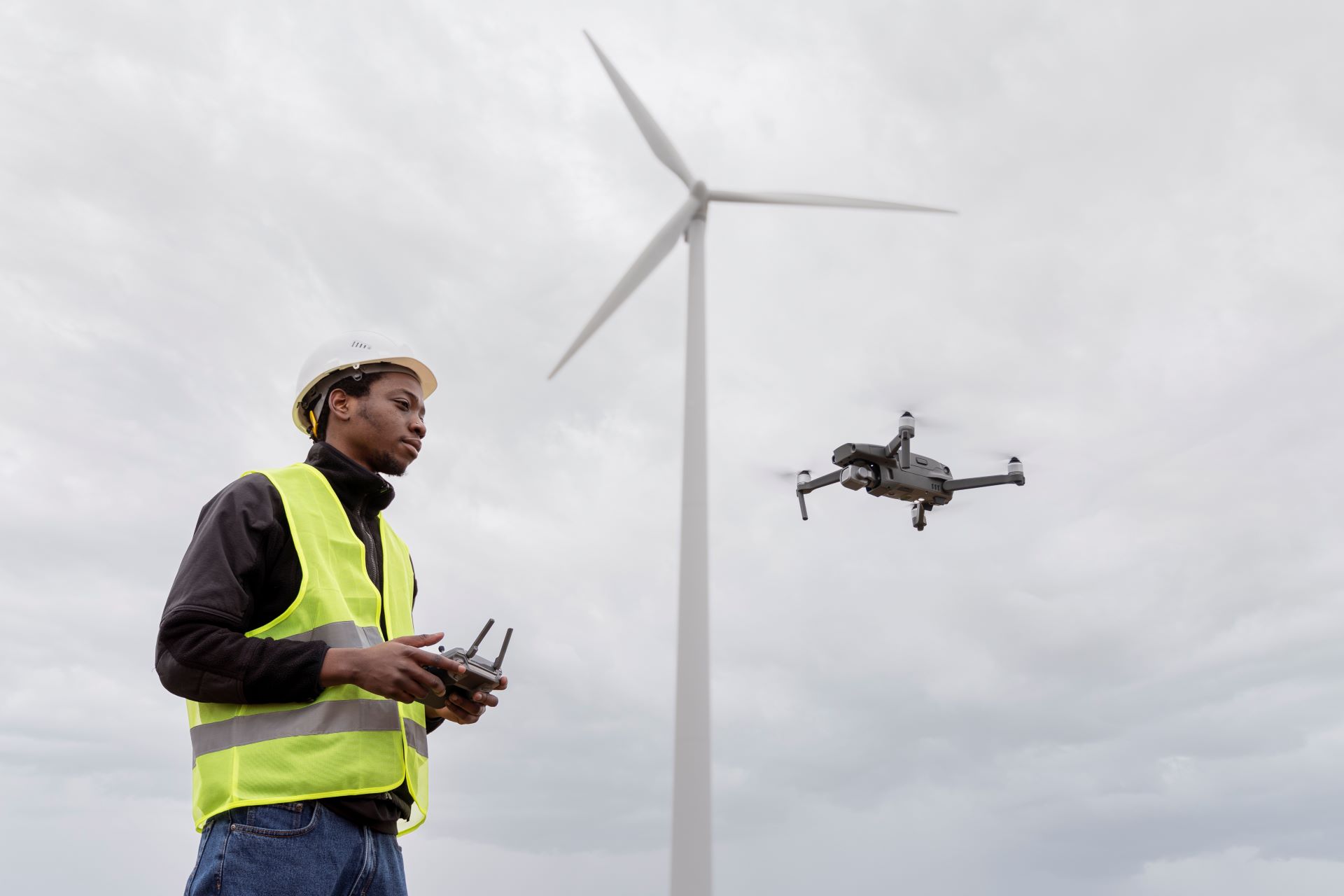
Drones remove the need for inspectors to physically access these hazardous areas. Instead of climbing onto a potentially unsafe structure, operators can assess conditions from the ground. This significantly reduces the likelihood of falls and injuries, which in turn lowers liability for contractors and property owners.
In a local context where compliance and insurance costs are closely tied to safety records, this is a meaningful advantage. Fewer incidents translate into fewer claims, smoother project approvals, and stronger reputations for construction firms.
Efficiency Gains That Go Beyond Speed
Speed is often the first benefit people associate with drone inspections, and for good reason. A task that might take several hours using traditional methods can often be completed in a fraction of the time with a drone.
However, the real efficiency gains run deeper.
Drones can cover large surface areas quickly without the need for extensive setup. There is no requirement for scaffolding, cherry pickers, or safety harness systems, which not only saves time but also reduces logistical complexity. This is particularly valuable in urban South African environments where space is limited and disruptions need to be minimised.
The ability to capture high-resolution imagery and video in a single flight means that inspections are more comprehensive. Instead of relying on selective visual checks, inspectors can review an entire roof surface in detail. This reduces the likelihood of missed defects and allows for more accurate maintenance planning.
In addition, drone data can be stored, analysed, and revisited over time. This creates a historical record of a building’s condition, enabling predictive maintenance rather than reactive repairs. For property managers overseeing multiple sites, this level of insight is invaluable.
High-Resolution Imaging and Data Accuracy
One of the most transformative aspects of drone technology is the quality of data it provides.
Modern drones are equipped with cameras capable of capturing ultra-high-definition images. These images reveal fine details such as hairline cracks, loose flashing, and early signs of corrosion that might be overlooked during a manual inspection.
Thermal imaging adds another layer of capability. By detecting temperature variations, drones can identify issues such as water ingress, insulation failures, and heat loss. In South Africa’s varied climate, where buildings are exposed to intense sun, heavy rains, and occasional storms, these insights are particularly relevant.
Accurate data leads to better decision-making. Instead of relying on subjective assessments, maintenance teams can base their actions on clear visual evidence. This improves the quality of repairs and reduces the risk of recurring issues.
For contractors, detailed reports supported by drone imagery also enhance transparency with clients. It becomes easier to justify maintenance recommendations and associated costs when the evidence is clearly visible.
Cost Considerations in the Local Market
While drones require an initial investment, they often result in cost savings over time.
Traditional roof inspections involve multiple cost components, including labour, equipment hire, and safety measures. Scaffolding alone can represent a significant expense, especially for large or complex structures. Add to this the potential costs associated with accidents or delays, and the financial impact becomes substantial.
Drone inspections reduce or eliminate many of these costs. A single operator can conduct an inspection without the need for extensive support equipment. Projects can be completed faster, which reduces labour expenses and minimises disruption to building occupants.
In the South African market, where budget constraints are a constant consideration, this cost efficiency is a major selling point. Property owners and managers are increasingly looking for solutions that deliver value without compromising on quality or safety.
It is also worth noting that drones can be used across multiple projects, spreading the initial investment over time. For construction firms and maintenance companies, this makes the technology even more attractive.
Applications Across Different Building Types
The versatility of drones makes them suitable for a wide range of applications.
In residential settings, drones are particularly useful for inspecting tiled roofs, identifying broken or displaced tiles, and checking gutter conditions. Homeowners benefit from a non-invasive inspection process that does not risk further damage to the roof.
Commercial buildings, such as office complexes and shopping centres, often have large, flat roofs with complex installations. HVAC systems, solar panels, and drainage structures can all be inspected efficiently using drones. This ensures that potential issues are identified early, before they escalate into costly repairs.
Industrial facilities present their own challenges. Roofs may be difficult to access due to height, layout, or operational constraints. Drones provide a practical solution, allowing inspections to be conducted without interrupting operations.
In the context of South Africa’s growing renewable energy sector, drones are also playing a role in inspecting solar installations. Ensuring that panels are clean, properly aligned, and free from defects is essential for maintaining efficiency.
Regulatory Considerations in South Africa
The use of drones in South Africa is regulated by the South African Civil Aviation Authority. Operators are required to comply with specific rules, including licensing requirements and operational guidelines.
For commercial use, a Remote Pilot Licence is typically required, along with registration of the drone and approval of the operating organisation. These regulations are designed to ensure safety in the airspace and to protect people and property on the ground.
For construction and maintenance companies, this means that drone inspections must be conducted by qualified professionals. While this adds a layer of complexity, it also ensures that operations are carried out to a high standard.
Working with licensed drone service providers is often the most practical approach. These providers bring the necessary expertise, equipment, and regulatory compliance, allowing construction firms to focus on their core activities.
Integrating Drones into Maintenance Workflows
Adopting drone technology is not just about acquiring equipment. It requires a shift in how inspections are planned and executed.
Integration begins with identifying where drones can add value. This might include routine inspections, pre-project assessments, or post-repair verification. Once these use cases are defined, processes can be developed to incorporate drone data into existing workflows.
Training is another important consideration. Even when using external service providers, internal teams need to understand how to interpret drone data and apply it to maintenance decisions.
Digital tools play a key role in this integration. Software platforms can be used to organise images, generate reports, and track maintenance activities over time. This creates a more cohesive and efficient system, where data flows seamlessly from inspection to action.
In South Africa, where many construction firms are still transitioning towards digital solutions, drones can act as a catalyst for broader technological adoption.
Challenges and Limitations
Despite their advantages, drones are not without limitations.
Weather conditions can affect flight operations. High winds, rain, and poor visibility can all impact the quality of inspections or prevent flights altogether. In regions of South Africa that experience unpredictable weather patterns, this needs to be factored into planning.
Battery life is another consideration. While most modern drones offer sufficient flight time for typical inspections, larger projects may require multiple flights or additional equipment.
There are also privacy and security concerns. Flying a drone over residential or commercial properties requires careful consideration of privacy rights. Operators must ensure that they comply with regulations and respect the boundaries of neighbouring properties.
Finally, while drones excel at visual inspections, they may not completely replace the need for physical access in all cases. Certain issues may still require hands-on assessment or repair work.
The Future of Roof Inspections
The trajectory of drone technology suggests that its role in construction and maintenance will continue to expand.
Advancements in artificial intelligence are enabling automated defect detection, where software can analyse images and identify potential issues without human intervention. This has the potential to further improve accuracy and efficiency.
Integration with other technologies, such as building information modelling, is also on the horizon. This would allow drone data to be incorporated into detailed digital models of buildings, providing a comprehensive view of their condition.
In South Africa, where the construction industry is under pressure to improve productivity and safety, these developments are particularly relevant. Drones are not just a tool for today but a stepping stone towards a more advanced and data-driven future.
A Safer, Smarter Standard
Drone-based roof inspections represent a significant step forward for construction and building maintenance in South Africa. By reducing risk, improving efficiency, and providing high-quality data, they address many of the challenges associated with traditional inspection methods.
For property owners, contractors, and maintenance professionals, the benefits are clear. Safer operations, better insights, and more cost-effective processes all contribute to a stronger, more resilient built environment.
As the technology continues to evolve and adoption increases, drones are likely to become a standard part of the inspection toolkit. What was once an innovative alternative is quickly becoming the new normal, offering a smarter way to keep South Africa’s roofs in top condition.