
The Science Behind Concrete Cracking in SA Heat
The Science of Why Concrete Cracks in South African Conditions
Concrete in South Africa lives a double life. On the surface it appears immovable, stoic, almost geological in its patience. Yet beneath that stillness, it is constantly negotiating with heat, moisture, and time. The cracks that eventually appear are not random failures but the visible handwriting of environmental stress written into the material itself.
To understand why this happens, one must look past the assumption that concrete simply “dries.” It does not. It cures through a chemical process called hydration, where cement binds water into crystalline structures that give the material its strength. When that process is disrupted by South African climate conditions, the structure begins to fracture in ways that are both predictable and preventable.
Heat as the Silent Accelerator
South Africa’s climate, especially across the Highveld and interior regions, introduces aggressive thermal conditions during construction periods. High daytime temperatures, low humidity, and persistent wind combine to accelerate surface evaporation faster than the internal curing process can keep up.
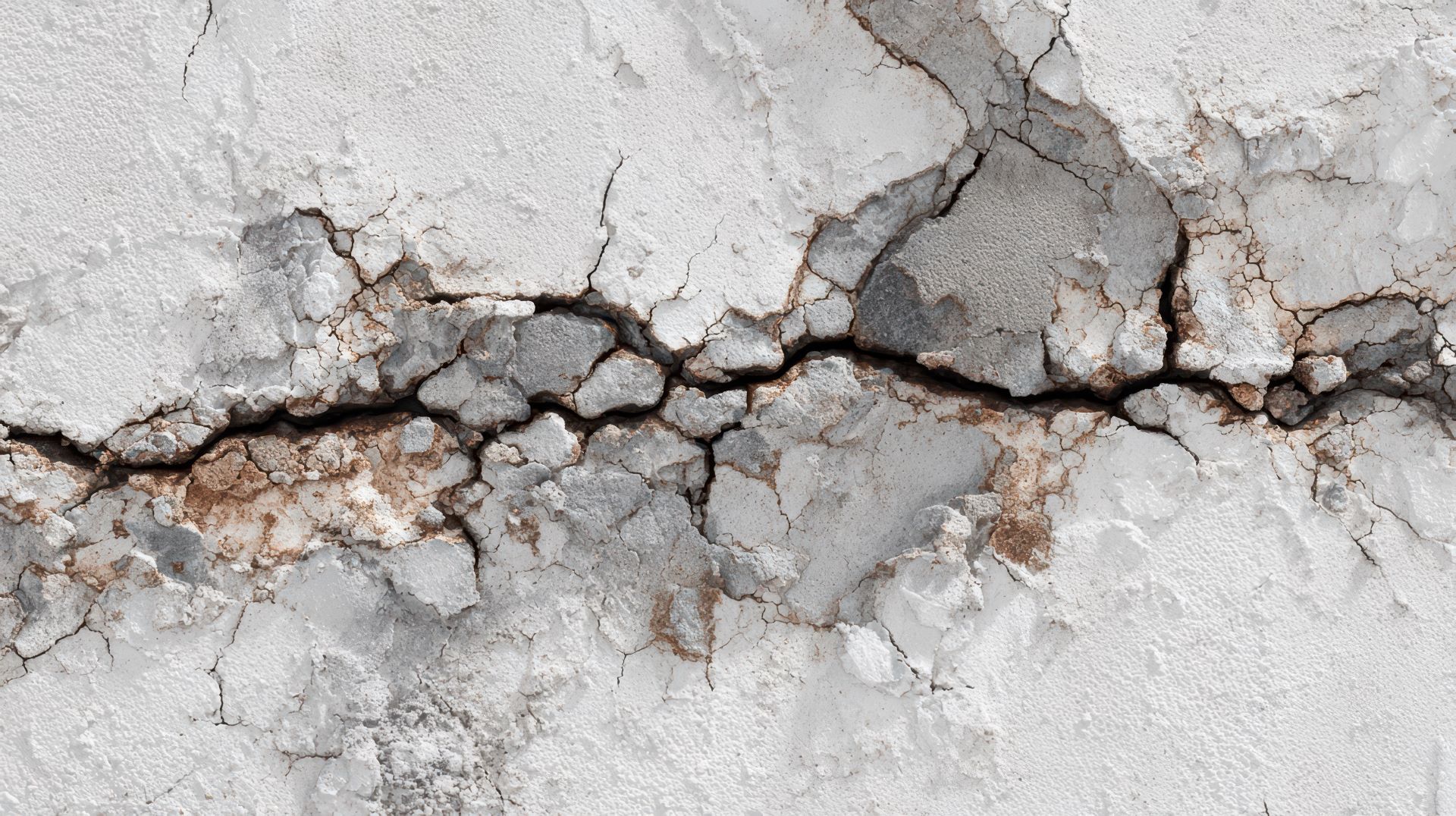
When the surface of freshly poured concrete loses moisture too quickly, it contracts while the deeper layers remain expanded and saturated. This mismatch creates internal tension. Concrete, being inherently weak in tension, responds by forming microfractures that eventually surface as visible cracks.
This is particularly pronounced during summer pours where midday heat can push surface temperatures into extremes. The outer layer begins to stiffen prematurely while the core is still in a plastic state, creating a layered structure that behaves almost like two materials trying to exist at different speeds.
Over time, these early microfractures become pathways for water ingress, accelerating reinforcement corrosion and long-term deterioration.
The Chemistry of Curing and Why Timing Matters
Curing is the most misunderstood phase of concrete construction in South Africa. It is often treated as an afterthought when it is in fact the foundation of long-term durability.
During hydration, cement particles react with water to form calcium-silicate-hydrate structures that give concrete its compressive strength. If water is lost too early, this reaction stops prematurely, leaving behind unbonded particles and voids within the matrix.
In South African conditions, especially in inland provinces, wind-driven evaporation can disrupt this process within hours. What appears as a solid slab may in fact be an incomplete chemical structure, still developing strength beneath the surface.
Proper curing is therefore not about drying the concrete but about controlling moisture retention. The longer hydration is allowed to continue evenly, the denser and more resilient the final structure becomes.
Moisture Cycles and the Expansion-Contradiction Problem
One of the most destructive forces in South African construction is not a single environmental event, but repeated moisture cycling.
Many structures experience alternating wet and dry conditions due to rainfall patterns, irrigation runoff, and seasonal humidity changes. Concrete responds to these cycles by expanding when moist and contracting when dry.
Each cycle introduces a small amount of stress. Over months and years, these stresses accumulate until the material exceeds its tensile capacity. At that point, cracking becomes inevitable.
Coastal regions experience a slightly different variation of this problem. Salt-laden moisture penetrates microcracks more easily, accelerating internal corrosion of steel reinforcement. Inland regions, by contrast, experience more extreme thermal swings, which drive expansion and contraction at a faster rate.
Both environments lead to the same outcome through different mechanisms: structural fatigue expressed as cracking.
Plastic Shrinkage and the First 72 Hours
The earliest cracks often form before most people even realise the concrete has begun to set. This stage, known as plastic shrinkage, occurs when the surface loses moisture faster than bleed water can replace it.
In South African summer conditions, this can happen rapidly. Hot winds strip moisture from the surface while the interior remains soft. The result is a network of fine, hairline cracks that resemble a faint map etched across the slab.
Although often considered superficial, these cracks mark the beginning of long-term vulnerability. They reduce surface integrity and allow future moisture ingress, which compounds deterioration over time.
Proper shading, timely curing compounds, and continuous moisture control during this phase are essential in preventing early-stage damage.
Thermal Expansion and the Daily Rhythm of Stress
Concrete expands when heated and contracts when cooled. In South Africa, where diurnal temperature swings can be significant, this creates a daily cycle of mechanical stress.
During the heat of the day, slabs expand slightly, placing pressure on joints and restraints. At night, cooling causes contraction. If movement is restricted by foundations, reinforcement, or adjacent structures, the stress is transferred into the material itself.
Over time, this repeated expansion-contraction cycle contributes to fatigue cracking. It is not a sudden failure but a slow structural negotiation that eventually resolves itself through fracture.
Control joints are designed to manage this behaviour, but when spacing or placement is incorrect, the material finds its own release points in the form of uncontrolled cracks.
The Role of Mix Design in South African Conditions
Not all concrete is created equal, and in South Africa, mix design plays a critical role in determining long-term performance.
Excess water in the mix remains one of the most common causes of cracking. While it improves workability during placement, it increases shrinkage potential as the water evaporates during curing. This shrinkage introduces internal stress that weakens the matrix.
Aggregate quality also influences performance. Poorly graded or inconsistent aggregate distribution creates weak zones where cracks are more likely to initiate under stress.
In high-temperature environments, admixtures are often used to slow hydration rates or improve workability without increasing water content. When used correctly, they help stabilise the curing process under harsh climatic conditions.
Subgrade Movement and Hidden Structural Stress
Concrete does not exist in isolation. It is supported by soil, and in South Africa’s varied geology, subgrade movement is a major but often overlooked contributor to cracking.
Expansive clay soils, common in several regions, swell when wet and shrink when dry. This movement applies uneven pressure to slabs, creating bending stresses that exceed concrete’s tensile capacity.
Even well-cured concrete can crack if the ground beneath it shifts unevenly. This type of cracking is often mistaken for material failure when it is actually a foundation interaction issue.
Proper compaction and moisture-stable subgrade preparation are therefore as important as the concrete mix itself.
Reinforcement and the Illusion of Immunity
Steel reinforcement does not prevent cracking. It controls it.
Reinforced concrete is designed to hold cracks tightly together rather than eliminate them entirely. When cracks do form, steel bars carry tensile loads and prevent catastrophic separation.
However, if cracks form too early due to poor curing or extreme environmental exposure, reinforcement becomes vulnerable. Once moisture penetrates to steel levels, corrosion begins. As steel rusts, it expands, which further widens cracks and accelerates structural degradation.
This creates a feedback loop where initial cracking leads to corrosion, which leads to further cracking.
South African Construction Practices and Common Failures
Across residential and commercial projects, several recurring patterns contribute to premature cracking.
Rushed curing due to tight project timelines remains one of the most significant issues. Concrete is often finished aesthetically but not protected environmentally during its most vulnerable phase.
Inadequate joint placement is another frequent oversight. Without properly designed control joints, slabs are forced to crack randomly to relieve internal stress.
Finally, inconsistent site supervision during early curing stages allows environmental exposure to disrupt hydration before the material has stabilised.
These issues are not dramatic failures but small accumulations of overlooked detail that manifest later as visible damage.
Maintenance Implications and Lifecycle Cost Reality
Cracked concrete is not only a structural concern but a maintenance burden. In South Africa, where temperature and moisture cycles are persistent, untreated cracks tend to widen over time.
Water ingress leads to reinforcement corrosion, surface scaling, and eventual spalling. Each stage increases repair complexity and cost.
Lifecycle cost engineering shows that investment in proper curing and early-stage protection dramatically reduces long-term maintenance expenditure. In other words, the most expensive concrete is often the concrete that was rushed at the beginning.
Reading the Language of Cracks
Concrete cracking in South African conditions is not an anomaly but a predictable response to environmental stress, material behaviour, and construction practice.
Heat accelerates evaporation. Moisture cycles create expansion fatigue. Poor curing interrupts chemical development. Subgrade movement adds structural instability. Together, they form a system of pressures that concrete must continuously negotiate.
Cracks, then, are not simply failures. They are records of that negotiation, etched into the surface as evidence of what the material endured.
Understanding this allows builders, engineers, and maintenance teams to shift from reactive repair to preventative design, ensuring that concrete structures in South Africa are not only strong at birth but resilient through their entire lifecycle.