Urban Density & Building Maintenance in South Africa
When Cities Stack Up, Systems Strain Out
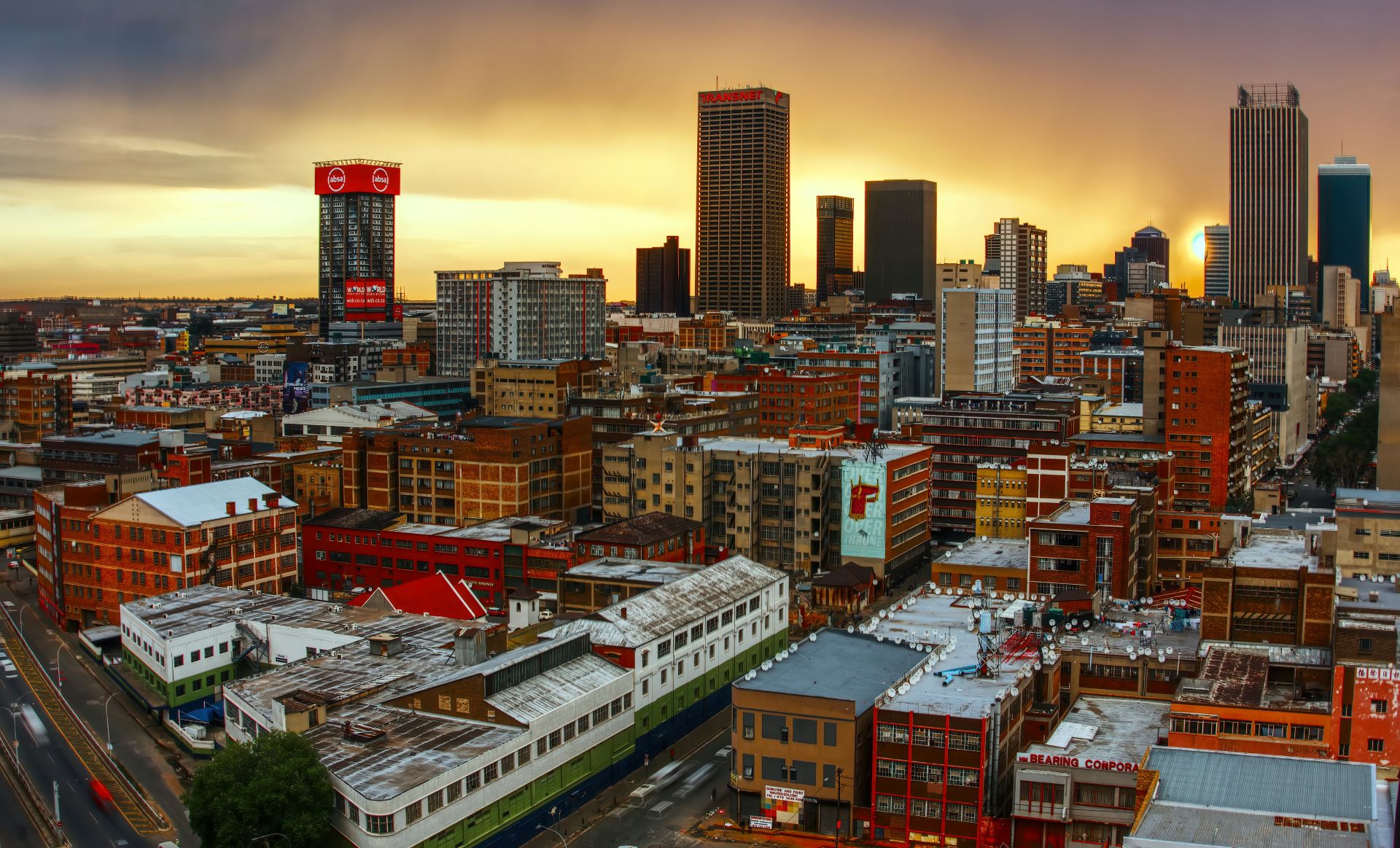
Urban density is often celebrated as the pulse of modern life. More people, more opportunity, more vertical living, more convenience. In South African cities like Johannesburg, Cape Town, Durban, and Pretoria, density is not just a planning concept; it is a lived reality shaped by apartment blocks, sectional title schemes, mixed-use precincts, and rapidly growing informal edges pressing against formal infrastructure.
But beneath the skyline and the buzz of city living lies a quieter truth: density does not just concentrate people, it concentrates pressure. On pipes. On power systems. On lifts. On parking basements. On roofs that never stop taking a beating from sun, wind, and increasingly erratic weather patterns.
In building maintenance terms, density is not neutral. It is a multiplier.
Every shared system becomes more critical, more fragile, and more expensive to neglect.
Shared Infrastructure: The Invisible Backbone of City Living
In low-density environments, buildings often operate in isolation. A standalone house manages its own water, electricity connection, waste, and access. In dense urban environments, especially in South Africa’s growing high-rise and sectional title developments, infrastructure becomes shared by design.
That means:
- One set of pumps serving hundreds of units
- One electrical intake feeding an entire complex
- One drainage system handling constant, high-volume use
- One roof structure protecting dozens of households
- One lift system carrying thousands of trips per week
This shared model is efficient on paper, but in practice it creates a dependency web where failure in one node affects everyone.
When Johannesburg Water experiences pressure drops or interruptions, high-rise buildings feel it immediately. When Eskom load shedding hits, backup systems in apartment blocks are pushed to their limits. When stormwater systems in Cape Town are overwhelmed, basement parking areas in dense precincts become high-risk zones.
In short, shared infrastructure is a shared vulnerability.
The Maintenance Multiplier Effect
Urban density does something subtle but powerful: it accelerates wear cycles.
A lift in a single-family home does not exist. A lift in a 20-storey building runs constantly, often thousands of cycles per week. A rooftop in a suburban house may only experience limited access, while in a dense block it hosts solar installations, HVAC systems, water tanks, communication equipment, and constant maintenance traffic.
This creates what can be described as a maintenance multiplier effect.
The more people and systems a building supports, the faster components degrade. Not necessarily because they are poorly built, but because they are more heavily used.
In South African conditions, this is intensified by:
- Power instability increasing mechanical stress during restarts
- Water quality variability affecting plumbing and filtration systems
- Coastal humidity accelerating corrosion in cities like Durban and Cape Town
- Heat extremes in inland cities increasing HVAC loads
A building in a dense urban area is not just ageing with time. It is ageing with usage intensity.
South African Cities: A Perfect Storm of Density and Strain
South Africa’s urban centres present a unique maintenance challenge because density is layered onto infrastructure that is already under pressure.
Johannesburg, for example, has high-rise commercial cores and dense residential clusters built over ageing municipal systems. Water pressure fluctuations, burst pipes, and intermittent outages are common stress points that cascade into building-level maintenance issues.
Cape Town introduces another layer: environmental exposure. Coastal air, salt corrosion, and wind-driven rain mean that dense developments near the Atlantic seaboard experience accelerated material fatigue. Even high-quality aluminium, steel, and façade systems require more frequent inspection cycles.
Durban, with its humid subtropical climate, adds persistent moisture exposure, which is particularly harsh on concrete reinforcement, electrical systems, and mechanical plant rooms.
Across all these cities, one common thread emerges: municipal infrastructure and private building systems are tightly interdependent. When one struggles, the other absorbs the impact.
Vertical Living and the Pressure on Core Systems
As cities grow upward, core building systems become critical infrastructure nodes. In dense residential towers and mixed-use buildings, the following systems carry disproportionate importance:
- Water reticulation and booster pumps
- Electrical distribution boards and backup generators
- Fire detection and suppression systems
- Waste removal and chute systems
- Elevator and access control systems
Each of these systems operates under continuous load.
Take elevators as an example. In a low-density building, elevator usage may be sporadic. In a dense apartment block, it becomes constant. Morning rush hours alone can generate hundreds of cycles within minutes. This translates directly into increased maintenance frequency, part replacement cycles, and inspection requirements.
Similarly, water systems in dense buildings are not just about supply. They are about pressure balancing across floors, peak usage smoothing, and redundancy planning for outages.
When any of these systems fail, the impact is immediate and collective.
The Cost of Shared Neglect
Maintenance in dense buildings is not only about technical wear. It is also about governance.
In South Africa, many urban residential buildings operate under sectional title schemes or body corporate management structures. This means maintenance decisions are shared responsibilities, often subject to budget constraints, differing priorities, and delayed consensus.
In a low-density home, deferred maintenance affects one household. In a dense building, deferred maintenance compounds across multiple stakeholders.
A small leak in a roof system can become:
- Structural dampness across multiple units
- Electrical hazards in ceiling cavities
- Mould proliferation affecting indoor air quality
- Escalating repair costs that multiply over time
Neglect does not remain local in dense environments. It spreads through shared infrastructure like a slow-moving fault line.
Municipal Infrastructure and the Building Interface
One of the most overlooked aspects of urban density is the interface between private buildings and public infrastructure.
In South African cities, this boundary is increasingly under strain. Water mains, electrical grids, sewage systems, and road access networks all feed directly into dense developments.
When municipal infrastructure is unstable or under-resourced, buildings are forced to compensate. This leads to:
- Increased reliance on private water storage tanks
- Generator-heavy energy strategies
- Private waste removal contracts
- Pressure booster systems to maintain water flow
- On-site stormwater management solutions
Each of these adds complexity and maintenance overhead at the building level.
In effect, density shifts responsibility downward, from city systems to building systems.
Climate Stress Meets Urban Concentration
Climate variability is becoming a defining factor in building maintenance across South Africa.
Urban density amplifies the impact of climate because more assets are concentrated in smaller physical footprints. Heatwaves increase cooling demand across entire precincts simultaneously. Heavy rainfall events stress shared drainage systems across multiple buildings at once.
In dense environments, climate events are not isolated incidents. They are system-wide stress tests.
Roofs, façades, and external cladding systems in high-density buildings experience compounded exposure because they are not only serving structural functions but also protecting multiple interconnected systems beneath them.
This is where maintenance shifts from reactive to predictive thinking. Buildings must anticipate strain rather than simply respond to failure.
Material Fatigue in High-Use Environments
Materials behave differently under dense usage conditions.
Concrete in parking structures experiences constant vibration from traffic flow. Steel components in shared infrastructure corridors face accelerated corrosion from humidity and pollution. Sealants around windows and façades degrade faster due to thermal cycling and constant exposure.
Even paint systems in high-density buildings serve a functional role beyond aesthetics. They become protective layers against environmental and mechanical stress.
In South African coastal cities, salt-laden air accelerates oxidation processes. Inland cities like Johannesburg introduce dust and pollution particulates that accumulate in ventilation systems and mechanical rooms.
Urban density ensures that no material remains idle long enough to recover. Everything is in use, all the time.
The Financial Geometry of Density
Maintenance costs in dense buildings do not scale linearly. They scale geometrically.
More units do not simply mean more cost. They mean more coordination, more systems interdependence, and more failure points.
However, density also creates economies of scale:
- Bulk servicing contracts for elevators and HVAC systems
- Shared infrastructure reducing per-unit installation costs
- Centralised energy systems improving efficiency when well managed
- Collective maintenance funds distributing financial burden
The challenge lies in balance. Poor governance or underfunding quickly tips the system from efficient to fragile.
In South Africa, where economic pressures are significant, maintenance budgets in residential complexes are often stretched. This creates a gap between theoretical efficiency and practical upkeep.
Human Behaviour as a Maintenance Variable
In dense buildings, human behaviour becomes part of the infrastructure equation.
High occupancy means more wear on shared spaces:
- Constant door usage
- Increased lift cycles
- Higher water consumption peaks
- Greater waste output
- More frequent misuse or accidental damage
Unlike mechanical systems, human behaviour is unpredictable and difficult to regulate. Yet it directly impacts maintenance cycles.
Education, communication, and building culture become unexpected but critical components of infrastructure longevity.
A well-maintained dense building is often not just a product of engineering. It is a product of collective discipline.
Retrofitting Density: The Challenge of Older Buildings
Many South African cities contain older apartment blocks and office buildings that were not designed for current density levels.
Retrofitting these structures introduces additional complexity:
- Upgrading electrical systems to handle modern loads
- Reinforcing plumbing networks for higher usage
- Adding backup power systems for load shedding resilience
- Improving fire safety compliance in older layouts
- Integrating modern access control and security systems
These upgrades often occur while the building remains occupied, adding logistical and safety challenges.
Urban density does not just stress systems. It forces them to evolve mid-operation.
The Future of Maintenance in Dense Cities
Looking ahead, urban density in South Africa is unlikely to decrease. If anything, it will continue to intensify as migration, economic concentration, and housing demand increase.
This means building maintenance will increasingly shift toward:
- Predictive maintenance using sensors and monitoring systems
- Smarter energy management in shared buildings
- Water reuse and efficiency systems at building scale
- Modular infrastructure that can be upgraded without full disruption
- Stronger integration between municipal and private infrastructure planning
The future dense building is not just a structure. It is a managed ecosystem.
Conclusion: Density as a Living System
Urban density is often framed as an architectural or planning challenge. In reality, it is a maintenance condition.
It changes how buildings age, how systems interact, and how failures propagate.
In South African cities, where infrastructure pressures, climate stress, and economic constraints intersect, density becomes a force that reshapes the entire lifecycle of a building.
To live in a dense city is to live inside a shared machine. One that hums constantly, strains constantly, and depends on constant care to keep moving.
Maintenance is not an afterthought in this environment. It is the quiet architecture of urban survival.