
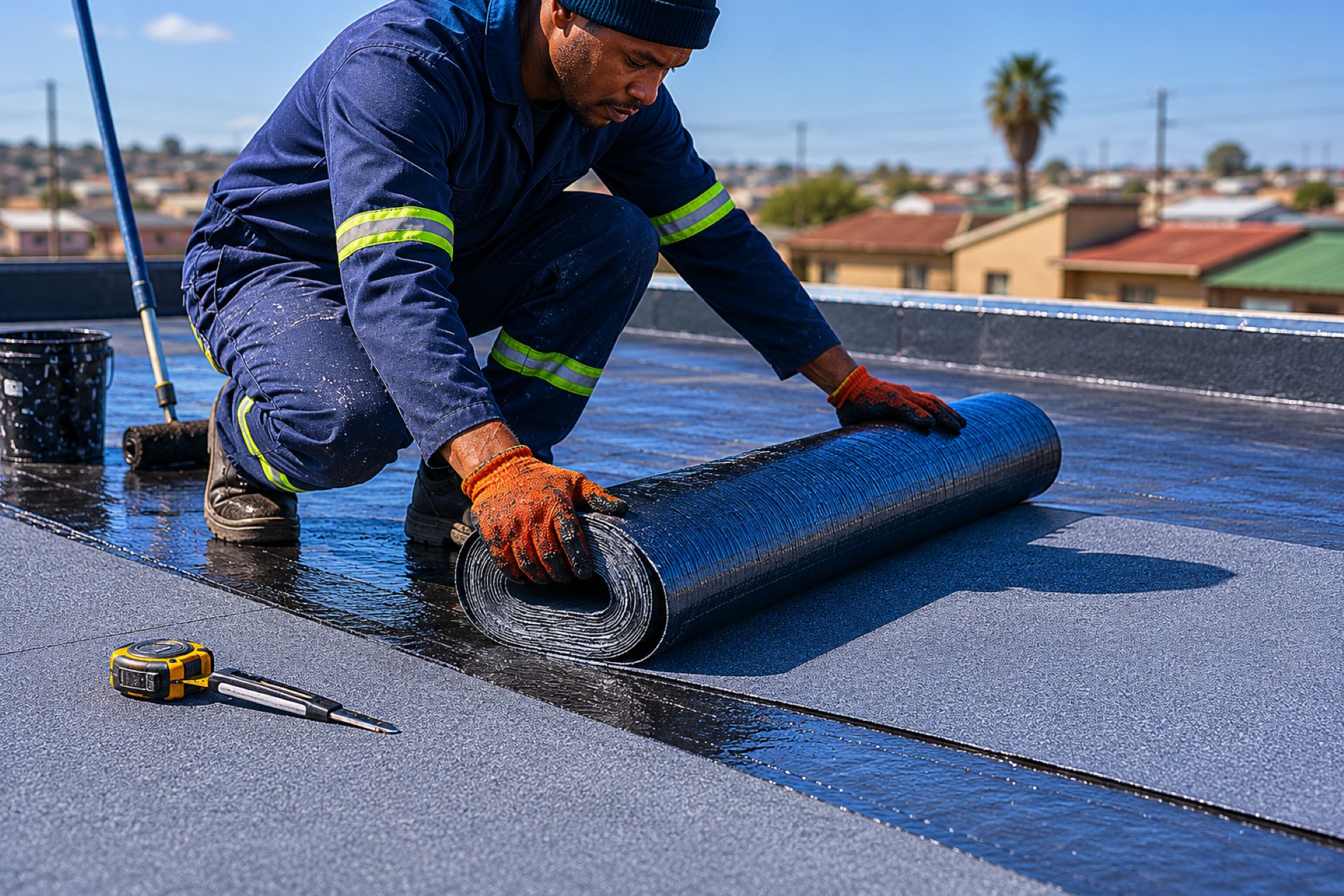
Why Waterproofing Needs Proper Surface Preparation
The Part Everyone Skips First
Waterproofing failures rarely begin with the membrane itself. They begin underneath it, in the quiet, unglamorous stage where surfaces are cleaned, repaired, and prepared.
In construction and building maintenance, waterproofing is often treated like a final flourish. A protective layer added at the end of a project, expected to perform miracles on whatever surface it lands on.
But waterproofing is not a paint-and-pray system. It is a bonding system. And bonding only works when the substrate is ready to receive it.
Preparation is not a supporting act. It is the stage where success is either locked in or quietly sabotaged.
Waterproofing Only Works as a Bond
Every waterproofing system depends on adhesion. Whether it is a liquid-applied coating, bituminous membrane, cementitious slurry, or polyurethane system, it must physically and chemically bond to the surface beneath it.
That bond has to resist:
- Moisture pressure from below
- Thermal expansion and contraction
- Structural movement and vibration
- UV and environmental stress
- Chemical exposure from the substrate
If the bond fails, the system stops being a barrier and becomes a loose skin. Water does not need a dramatic entry point. It only needs a weak interface.
That interface is created entirely during surface preparation.
Adhesion Failure: What Is Actually Happening
Adhesion failure sounds dramatic, but at a technical level it is very specific. It is the loss of molecular and mechanical grip between waterproofing material and substrate.
This usually happens in stages rather than all at once.
First, microscopic contamination weakens the bond. Dust, oils, or laitance create invisible separation layers. Then micro-debonding begins, where small sections lose grip under stress. Finally, water migration accelerates the failure, lifting larger sections of the system.
By the time visible peeling or blistering appears, the failure has already been active for some time.
In other words, adhesion failure is rarely sudden. It is delayed visibility of earlier mistakes.
What Surfaces Actually Look Like on Site
In theory, waterproofing is applied to clean, stable, dry surfaces.
In reality, construction and maintenance sites look very different.
Concrete surfaces often contain:
- Cement laitance (a weak powdery surface layer)
- Curing compounds left from casting
- Construction dust embedded in pores
- Small shrinkage cracks
- Uneven finishing from trowelling
Masonry surfaces may carry:
- Loose sand particles
- Inconsistent mortar joints
- Paint overspray or plaster residue
- Salt contamination from moisture movement
Steel or metal substrates frequently include:
- Rust oxidation layers
- Mill scale from fabrication
- Oil residues from handling
- Dust and environmental contamination during storage
Each of these conditions directly interferes with adhesion unless properly removed or treated.
Why Preparation Gets Rushed
Surface preparation is one of the most frequently compressed stages in construction timelines.
Not because it is unimportant, but because it is invisible once the job is complete.
Three common reasons it gets reduced:
- Pressure to progress to visible finishing stages
- Budget constraints that reduce labour or equipment time
- Assumption that product performance will compensate for poor prep
That last point is the most dangerous. Waterproofing systems are often marketed as high-performance solutions, but those performance claims assume ideal substrate conditions.
In practice, the system is only as strong as what it is bonded to.
Cleaning: More Than Making It Look Ready
Cleaning is often misunderstood as a visual step. It is not about appearance. It is about chemistry and surface compatibility.
Effective cleaning removes:
- Loose dust and debris that block adhesion
- Oils and grease that repel coatings
- Organic growth like algae or mould
- Residual curing compounds and release agents
Depending on the substrate, cleaning methods vary:
- Pressure washing for general contamination
- Solvent wiping for oils and greases
- Mechanical brushing for stubborn residues
- Chemical degreasing for industrial contamination
But even a perfectly cleaned surface is not necessarily ready. Cleanliness does not automatically equal bond readiness.
Moisture: The Hidden Failure Trigger
Moisture is one of the most underestimated causes of waterproofing failure.
Concrete is particularly deceptive. It can appear dry while still holding significant internal moisture. When waterproofing is applied too early, that trapped moisture becomes a problem.
It can cause:
- Blistering beneath coatings
- Delamination over time
- Poor curing of applied systems
- Hydrostatic pressure build-up under membranes
Environmental conditions also matter. High humidity slows evaporation, especially in coastal or rainy regions. This makes drying times unpredictable if not properly tested.
Moisture testing is not optional. It is a core part of preparation.
Mechanical Surface Preparation: Creating Grip
Mechanical preparation is where the surface is physically altered to improve adhesion. It is not just cleaning. It is reshaping.
Common methods include:
- Grinding: removes laitance and smooth finishes
- Shot blasting: creates uniform surface texture
- Scabbling: removes weak or damaged concrete layers
- Wire brushing: light preparation for small areas
- Sanding: fine surface refinement for coatings
The goal is to create a surface profile that allows the waterproofing system to anchor itself.
Too smooth and the system has nothing to grip. Too aggressive and the substrate may be damaged. The correct balance depends on the product specification and substrate condition.
Chemical Preparation and Priming
Chemical preparation works at a different level. Instead of changing shape, it changes compatibility.
Primers are used to:
- Improve adhesion between dissimilar materials
- Seal porous surfaces to prevent over-absorption
- Stabilise alkaline concrete surfaces
- Improve penetration of waterproofing systems
However, primers are not corrective tools for poor preparation. They are amplifiers of existing conditions.
If applied over contamination or moisture, they can lock in failure rather than prevent it.
The Most Common Causes of Adhesion Failure
In most real-world waterproofing failures, multiple issues are present at once.
The most common include:
- Dust or laitance left on the surface
- Application over damp or wet substrates
- Incorrect or missing primer systems
- Smooth surfaces without mechanical profiling
- Oil, grease, or chemical contamination
- Application outside temperature or humidity limits
Any one of these can weaken performance. Combined, they can cause complete system breakdown.
South African Environmental Pressure on Waterproofing
South African conditions make adhesion even more critical.
Buildings are exposed to:
- Intense UV radiation that accelerates material ageing
- Heavy seasonal rainfall increasing water load
- Coastal salt air causing chemical contamination
- Large temperature swings creating expansion and contraction
These forces continuously stress the bond line between substrate and waterproofing system.
A weak bond may survive in mild climates. In South African conditions, it rarely gets that chance.
A Practical Preparation Sequence
While every system has specific requirements, most successful waterproofing preparation follows a structured sequence:
- Inspect the substrate thoroughly
- Remove loose material and contamination
- Repair cracks, voids, and damaged areas
- Mechanically profile the surface where required
- Test moisture content and environmental conditions
- Apply compatible primer systems
- Perform final surface check before application
Each step builds on the previous one. Skipping a step does not reduce effort. It simply shifts the failure point forward in time.
Quality Control: The Step That Saves Projects
Quality control is where preparation is confirmed rather than assumed.
Key checks include:
- Visual inspection under proper lighting
- Surface roughness assessment where applicable
- Moisture content testing
- Adhesion test patches in critical areas
- Primer compatibility verification
This stage is often rushed, but it is one of the most cost-effective ways to prevent future waterproofing failures.
Maintenance: Keeping the System Alive
Even perfect installation is not the end of the story. Waterproofing systems live in an active environment.
Ongoing maintenance should look for early warning signs such as:
- Edge lifting or seam separation
- Blistering or bubbling in coatings
- Hairline cracks in protective layers
- Damp patches or water staining
- Movement at joints or transitions
Early intervention prevents small defects from becoming full system failures.
Everything Depends on What You Don’t See
Waterproofing success is often credited to the visible layer, the coating, membrane, or finish that sits on top.
But the real performance is determined beneath it.
Surface preparation is where waterproofing either becomes a durable system or a delayed failure.
Adhesion failure is not random. It is predictable. And it is almost always preventable.
In construction and building maintenance, especially in demanding environments like South Africa, preparation is not an extra step. It is the foundation of the entire system.
If the surface is right, the system performs.
If it is not, nothing on top can save it.